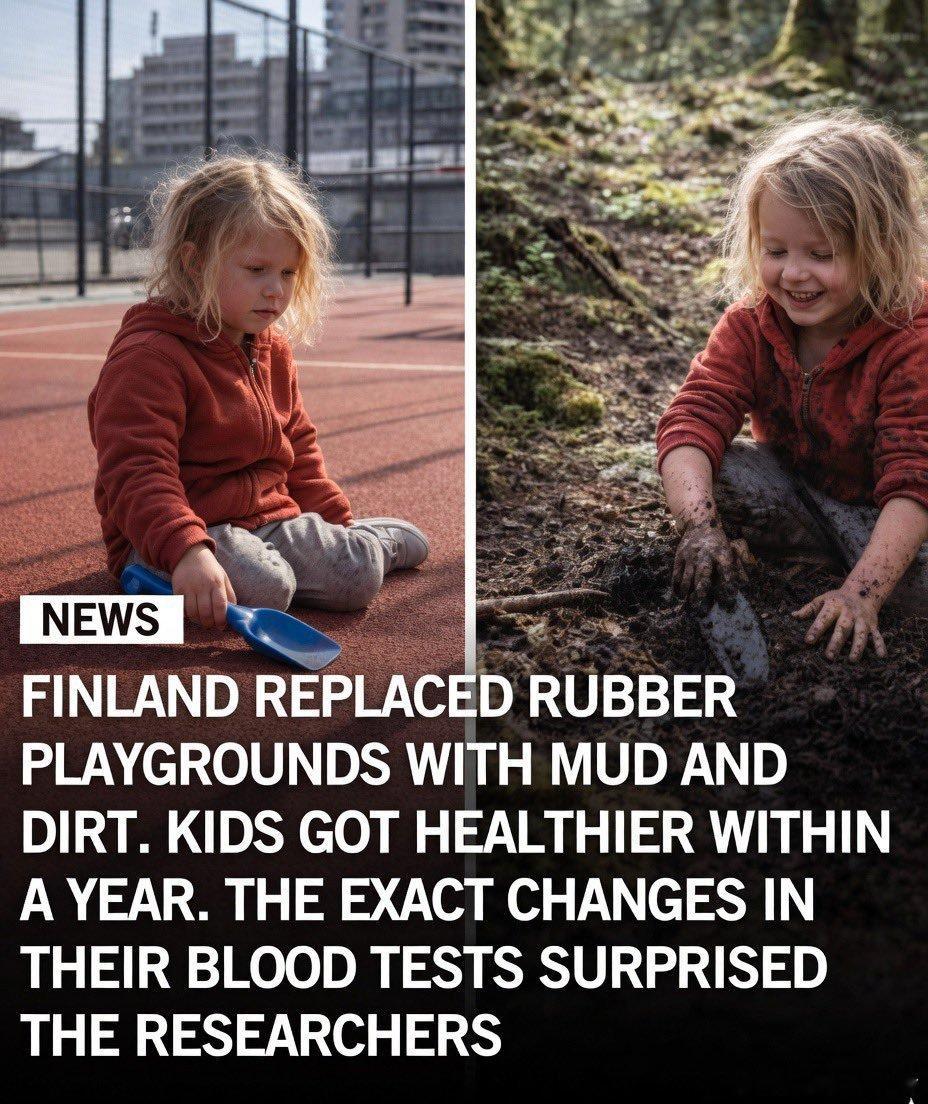
不干不净,玩了没病?
芬兰科学家用卡车运来真正的森林泥土和草皮,铺在四家日托中心的碎石地上。他们让孩子们在里面玩耍了一个月。血液检测结果显示,孩子们的皮肤发生了意想不到的变化,而且变化如此迅速、如此明显。
这项研究在芬兰两个城市的十家日托中心进行,共有75名3至5岁的儿童参与。其中四家日托中心进行了“森林改造”:在碎石地上铺上大约一个网球场大小的泥土和草皮,并放置了花盆和泥炭块,供孩子们挖掘和攀爬。另外三家日托中心则保留了原有的碎石地。最后三家日托中心的孩子们原本就每天都会去真正的森林里玩耍。
一个月后,孩子们皮肤上的细菌种类显著增加,其中有助于增强皮肤免疫力的细菌数量增长最为显著。他们的肠道菌群也开始与那些经常去森林玩耍的孩子们的肠道菌群相似。他们的血液中免疫细胞数量更多,这些免疫细胞的作用是防止身体对花粉和花生等无害物质产生过度反应,而且整体炎症水平也下降了。在普通砾石操场上玩耍的孩子们则没有出现这些变化。
1980年至1995年间,美国儿童哮喘的发病率翻了一番。1997年至2011年间,儿童食物过敏的发病率上升了50%,2007年至2021年间又上升了50%。2001年至2017年间,一岁儿童花生过敏的发病率增加了两倍。
芬兰研究人员认为,其中一个原因很简单:现在的孩子接触泥土的时间不够多。37%的美国学龄前儿童在平日里户外活动的时间不超过一小时。他们的免疫系统是在缺乏人类习以为常的细菌的环境中训练出来的。
领导这项研究的阿基·辛科宁直言不讳地说:“如果孩子们可以在水坑里玩耍,每个人都能挖有机土壤,那就太好了。”芬兰政府目前正在资助全国各地的托儿所进行同样的改造。
Finnish scientists trucked in real forest dirt and grass and laid it over the gravel at four daycare yards. They let the kids dig around in it for a month. The blood tests came back with changes the researchers hadn’t expected to see so fast or so clear.
The study ran at ten daycares in two Finnish cities with 75 kids aged three to five. Four of the yards got the forest treatment: about a tennis court worth of soil and grass laid over the gravel, plus planters and peat blocks the kids could dig and climb on. Three others stuck with their normal gravel yards. The last three were daycares where the kids were already visiting real forests every day.
After one month, the variety of bacteria living on the kids’ skin shot up, and the kind that helps train the skin’s immune defenses jumped the most. Their gut bacteria started to look like the gut bacteria of the forest-visiting kids. Their blood showed more of the immune cells whose job is to keep the body from freaking out at harmless stuff like pollen and peanuts, and overall inflammation dropped. The kids on the plain gravel yards showed none of this.
Childhood asthma in the US doubled between 1980 and 1995. Food allergies in kids jumped 50 percent between 1997 and 2011, then jumped another 50 percent between 2007 and 2021. And peanut allergies in one-year-olds tripled between 2001 and 2017.
The Finnish researchers think one of the reasons is simple: kids today don’t get dirty enough. 37 percent of American preschoolers now spend an hour or less outside on a normal weekday. Their immune systems are getting trained in environments stripped of the bacteria humans have always lived around.
Aki Sinkkonen, who led the study, put it in plain words: “It would be best if children could play in puddles and everyone could dig organic soil.” The Finnish government is now helping pay for daycares across the country to make the same changes.